The Netherlands: 1.5 million for Moldova after talks between Dutch Prime Minister Jetten and Moldovan President Sandu in The Hague
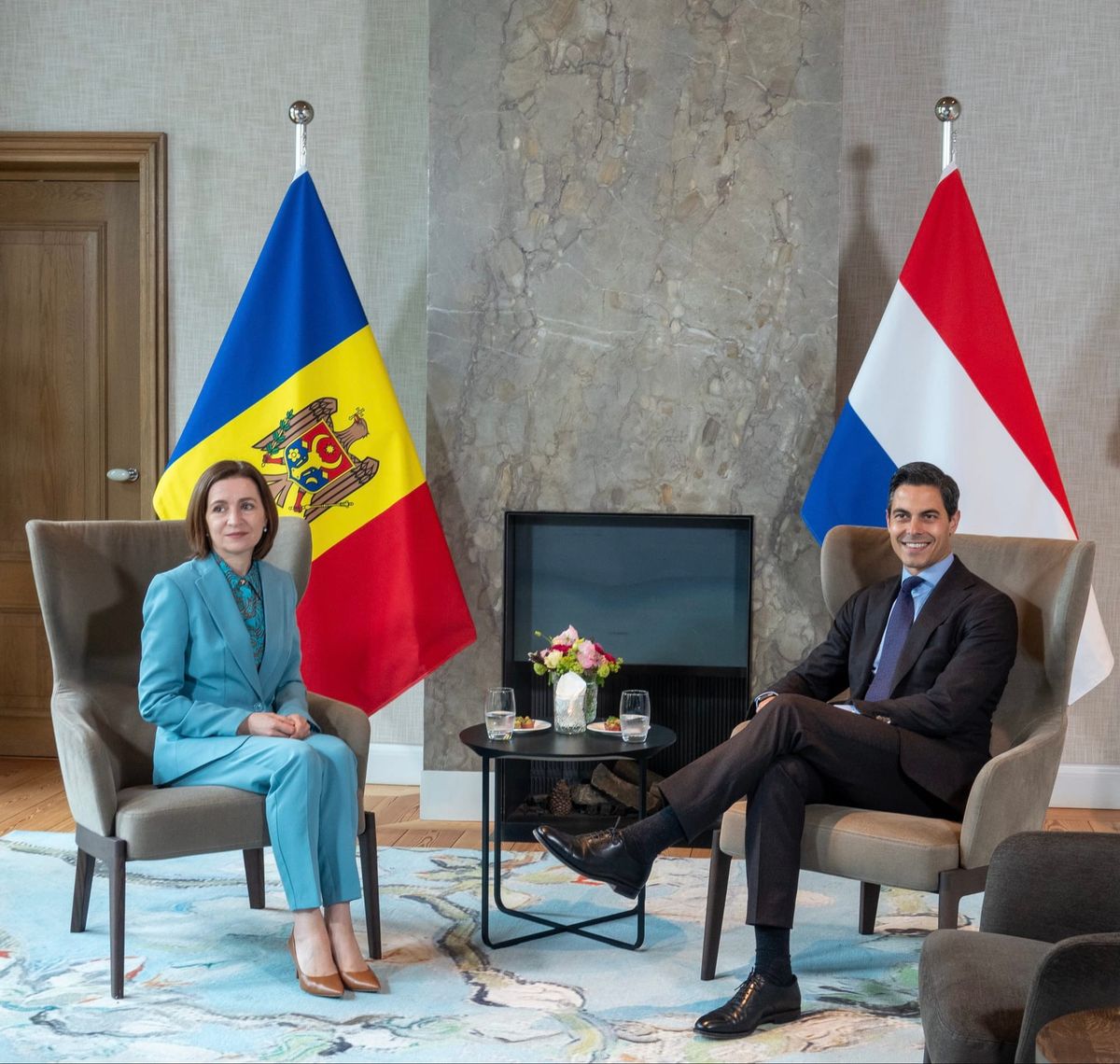
The Netherlands will allocate an additional €1.5 million in support to Moldova, focusing on defence cooperation, cybersecurity and strengthening resilience against hybrid threats. Prime Minister Rob Jetten announced the funding following his meeting with Moldovan President Maia Sandu in The Hague.
Jetten hosted Sandu at the Catshuis, the Dutch prime minister’s official residence. According to Jetten, the Netherlands and Moldova already cooperate closely across several areas, with strong bilateral ties providing scope for further intensification.
The talks centred on European integration, regional security and economic cooperation. Both countries also agreed to expand collaboration in the field of defence.
Targeted security support
The pledged €1.5 million is specifically intended to help Moldova enhance its national security capacity. Particular emphasis will be placed on strengthening digital resilience and protecting against cyberattacks—an issue that has gained urgency since Russia’s invasion of Ukraine.
The sum of €1.5 million is relatively modest and is primarily seen as a symbolic gesture signalling Dutch support for Moldova.
In recent years, the Netherlands has positioned itself as a partner and ally of Moldova, reflecting a broader strategic focus on Europe’s eastern flank. Since 2023, the Netherlands has once again maintained a full-fledged embassy in Chișinău, underlining its renewed diplomatic engagement in the region. The reopening forms part of a wider effort by the Dutch government to strengthen its presence and influence along the EU’s eastern borders.
At the same time, the Netherlands continues to oppose accelerated EU accession for countries such as Moldova within the European framework.
Support for EU ambitions
During the meeting, the Netherlands reiterated its support for Moldova’s European aspirations. Jetten emphasised that The Hague backs Moldova’s eventual accession to the European Union. The talks with Sandu are part of a broader diplomatic effort by Chișinău to secure backing from EU member states for further steps in the accession process.
President Sandu, in turn, underscored the importance of such support. She described the relationship as a “strong partnership based on shared values” and stressed that Moldova is implementing the necessary reforms to move closer to the EU. International backing, she added, remains crucial.
During her visit to The Hague, Sandu also held talks with other Dutch government officials.
The next step in EU membership
Earlier this month, EU ministers meeting in the General Affairs Council discussed accession progress with candidate countries from the Western Balkans, as well as Ukraine and Moldova. Several of these countries are pushing for a faster accession process, hoping that geopolitical tensions—particularly Russia’s war in Ukraine—will accelerate their path to EU membership.
However, the Netherlands, alongside several other member states, continues to advocate for a “merit-based enlargement process in which the pace of reforms is decisive,” according to the Dutch Ministry of Foreign Affairs. This reflects longstanding Dutch concerns about maintaining strict accession criteria.
At the same time, there is broad agreement among EU member states on moving forward. Ministers have expressed cautious optimism about the potential opening of the next phase of accession talks with both Ukraine and Moldova in the near future, starting with so-called Cluster 1, which focuses on fundamental reforms.