New European sanctions against Israeli settlers after Hungarian policy shift, backed by the Netherlands

All 27 member states of the European Union reached a political agreement on Monday on sanctions against violent Israeli settlers in the occupied West Bank, EU foreign policy chief Kaja Kallas announced.
The breakthrough follows a change in position by Hungary, which had blocked similar proposals for years. Under the newly installed pro‑European conservative government of Prime Minister Magyar, Budapest has lifted its veto, clearing the way for EU-wide consensus.
Long-running debate
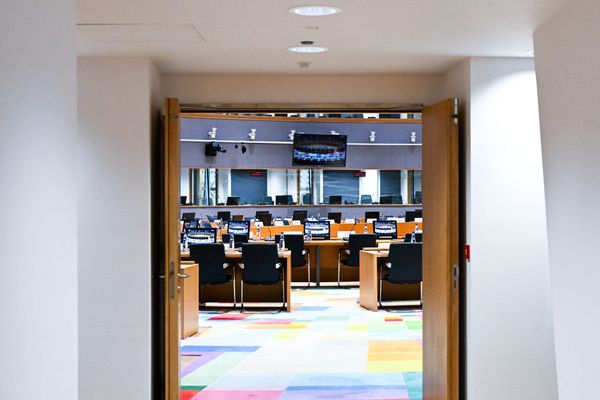
Sanctions against violent settlers have been under discussion within the EU for some time, partly at the urging of the Netherlands. The decision was taken during a meeting of EU foreign ministers in Brussels.
Formally, the agreement is political. Before the sanctions can enter into force, the relevant legal texts must still be approved by the member states. Details of the exact scope and content of the sanctions have not yet been made public.
Dutch position
The Netherlands has long expressed support for such measures. Ahead of the meeting, Dutch Foreign Minister Berendsen said he was hoping for a breakthrough.
“As far as the Netherlands is concerned, we should take action against products from the settlements and certainly against violent settlers,” Berendsen said. He stressed that Dutch policy is aimed both at addressing settlement-related economic activity and holding settlers involved in violence accountable.
Other measures remain controversial
Beyond sanctions targeting settlers, broader proposals to increase pressure on Israel remain on the table within the EU. According to Kallas, several member states have submitted additional ideas, but she did not expect agreement on those proposals on Monday. Many of these measures require unanimity.
They include the partial suspension of the EU–Israel Association Agreement. Berendsen also played down expectations of progress on that issue.
“My position has consistently been that pressure on Israel should be increased,” he said. Suspending the association agreement is, in the Dutch view, one possible instrument, but there is currently no majority within the EU for such a step. Germany, among others, opposes it.
In the coming weeks, it should become clear how quickly the formal decision-making process on the sanctions will move forward and when they may actually take effect.